
Invited Talks
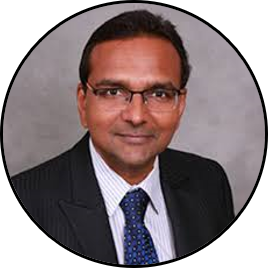
Title of Talk: Strategic KRAs for Faculty Success and Student Success

Mr. Dinesh Asrani,
Mentor, Naman Angels India Foundation, Bombay
Title of Talk: Ask Me Anything (Interactive session on Startup)
Keynote 1

Title of Talk: Carbon-Aware AI: Economic Benefits Without Compromising Performance
Abstract:
As artificial intelligence increasingly drives innovation across industries, large language models (LLMs) are generating substantial economic value but at the same time, their growing scale raises important questions around energy consumption and carbon emissions. This keynote addresses the need for carbon-aware AI by examining how high-performing AI systems can be designed responsibly. The talk highlights practical strategies for reducing the environmental footprint of LLMs, including energy-efficient model design, carbon-aware training and inference, and optimized infrastructure choices, without compromising performance. By bridging sustainability with economic viability, this session aims to equip researchers, industry leaders, and policymakers with actionable insights to support responsible AI adoption.
Keynote 2

Dr. Sheela Siddappa, Data Science and AI Leader, Commonwealth Bank of Australia, Bengaluru, India
Title of Talk: Differential Privacy: Enabling Safe Data for Societal Innovation
Abstract:
The exposure of individual or aggregated statistical data poses significant risks, including the potential disclosure of Personally Identifiable Information (PII). While safeguarding PII is critical, traditional approaches often limit the insights and innovations that can be derived from data. Differential Privacy offers a robust framework to balance privacy with utility, enabling secure data sharing without compromising individual confidentiality. This talk explores the principles of differential privacy, its practical challenges, and its pivotal role in building future models for a safe and secure society. A path for future research to focus on when building AI models.
Keynote 3

Prof. Özlem Özgün, Department of Electrical & Electronics Engineering,
Hacettepe University, Ankara, Turkey
Title of Talk: Modeling and Simulation: The Art of Approximating Reality
Abstract:
Will update soon.
Keynote 4

Dr. Bhavesh Vyas, Scientist D, NORMI Research Foundation, India
Title of Talk: Enabling Social Innovation through Net-Zero and Environmental, Social Governance: The Role of Academia–Industry Partnerships in Translating Research into Practice
Abstract:
The transition toward Net-Zero is increasingly recognized not only as a technological challenge but also as a process of social innovation that demands strong collaboration between academia, industry, and institutions. This keynote examines how Net-Zero pathways can enable sustainable societies when academic research is effectively translated into practical, scalable, and governance-ready solutions through academia–industry partnerships.
Drawing from interdisciplinary experiences in sustainability science, carbon accounting, ESG analytics, energy systems, and standards-aligned frameworks, the talk highlights mechanisms through which theoretical models evolve into real-world applications. It discusses co-creation approaches where universities and research institutions work alongside industry to develop pilot implementations, decision-support tools, and compliance-oriented systems that address industrial realities while maintaining scientific rigor.
To demonstrate this translational approach, the keynote will present two case studies. The first case study is from academia focuses on carbon footprint estimation of a university campus, examining its emission profile, institutional impact, and the identification of probable future mitigation pathways following systematic assessment. This case illustrates how academic carbon accounting exercises can inform strategic planning, behavioural change and long-term Net-Zero roadmaps, socializing the upcoming generation. The second case study from industry addresses the fundamentals of carbon management and the identification of greenwashing risks, drawing upon insights from an international technical report submitted under ISO (TR 19179). This case emphasizes the role of spatial component mapping integrated with sustainability reporting to enhance transparency, improve verification, and reduce greenwashing practices. Together, these case studies highlight how social innovation emerges through the embedding of academic rigor, industrial applicability, and standards-driven translational research, enabling credible and impactful Net-Zero pathways for sustainable societies.
Keynote 5

Dr. Jyotindra Narayan, IIT Patna, India
Title of Talk: Human-Aware Rehabilitation Robotics for Intelligent Assistive Systems and Clinical Translation
Abstract:
Robotic rehabilitation is increasingly transforming neuro-motor recovery by enabling human-aware, adaptive, and personalized therapy. This keynote reviews recent advances in human-in-the-loop rehabilitation robotics, encompassing wearable assistive systems, lower-limb gait support, upper-limb rehabilitation technologies, and AI-enabled prosthetic control. The talk highlights how adaptive control, learning-based methods, and multimodal sensing are integrated to achieve safe, intuitive, and subject-specific human–robot interaction, supported by experimental validation on emerging rehabilitation platforms. It further discusses simulation-assisted design and intelligent data-driven models that enhance functional assistance and recovery assessment. Emphasis is placed on translational perspectives, focusing on robustness, usability, and pathways toward clinically deployable human-aware rehabilitation technologies for diverse patient populations.
Keynote 6

Mr. Satish Mishra, L&T Technology Services
Title of Talk: Agentic Generative AI: From Synthetic Creativity to Social Innovation
Abstract:
Generative AI is rapidly evolving from a passive tool into an active agent—one capable not just of producing content, but of initiating actions, adapting to context, and collaborating with humans in meaningful ways. As foundation models gain multimodal fluency and autonomous reasoning, we enter a new paradigm where agentic AI systems redefine synthetic creativity through capabilities like prompt chaining, persistent memory, and cross-modal synthesis. This keynote explores how such systems can be ethically designed to reflect human values, promote inclusion, and drive social innovation across domains including education, healthcare, governance, and climate resilience. By weaving together real-world applications and philosophical inquiry, the talk challenges technologists, policymakers, and educators to reconsider the boundaries of agency, trust, and belonging in an AI-augmented society – underscoring that the future of GenAI is not merely technical, but deeply human, shaped by the choices we make and the values we embed.
Keynote 7

Prof. Rajesh Rajagopal,
IIM Trichy, India
Title of Talk: Predicting social sustainability for firms based on ESG ratings
Abstract:
Social sustainability is emerging as a critical dimension of corporate sustainability, yet its systematic prediction remains underexplored in the ESG literature due to the unavailability of large periodic data for analysis. This keynote session features on an integrated framework to predict social sustainability outcomes of firms using Environmental, Social, and Governance (ESG) indicators. Drawing on stakeholder theory and sustainability performance literature, the session conceptualizes social sustainability as an outcome shaped not only by many sustainability based practices, but also by governance mechanisms. The discussion is focused on small data prediction models using grey systems theory that uses firm-level ESG data as the inputs for predicting the social sustainability output for businesses. A combination of predictive analytics and multi-criteria evaluation can be employed to capture both linear and non-linear relationships among ESG dimensions. By mitigating social risks associated with health, safety, and community well-being, social sustainability performances of firms can be improved. The session introduces participants into small data prediction modelling techniques for advancing ESG research and thereby offering a predictive perspective on social sustainability performances. From a managerial standpoint, this prediction framework enables firms and policymakers to identify and predict using critical ESG indicators of social sustainability and align corporate strategies with the social dimensions of sustainable development.